Community Archiving Day - Lineages of Organizing
Sun, May 03
|SOMArts Cultural Center
We will invite community members to talk about and practice archiving their collections
Time & Location
May 03, 2026, 1:00 PM – 3:00 PM
SOMArts Cultural Center, 934 Brannan St, San Francisco, CA 94103, USA
About the event
Community Organizing Day "Lineages of Organizing: The Asian Pacific Islander Cultural Center at 30”
When history rhymes, the archive can be an oracle. Learn how to work with archives and help us preserve Asian American art history in this hand-on workshop. Bring your own photos, discs, flyers, and ephemera from APICC events to digitize alongside our existing holdings. Together, we make history!
Join APICC archivist Haneen Mohamed in workshopping strategies to preserve your work for future generations!
Haneen Mohamed is a Sudanese multimedia artist, storyteller, and archivist. Her archival work and artwork are intimately entwined, both seeking to explore the intricacies and contradictions of diasporic experience. Haneen is anostalgia-junkie interested in how Sudanese communities rectify diasporic ruptures through subversive collective memory practices and radical imagination. Her current projects include the Sudan Tapes Archive, an audio digitization project that seeks to build an accessible archive of Sudanese music, sonic history and culture. Her archival work has been featured on Dazed Middle East, NTS Radio, and Public Radio.
ABOUT THE EXHIBITION
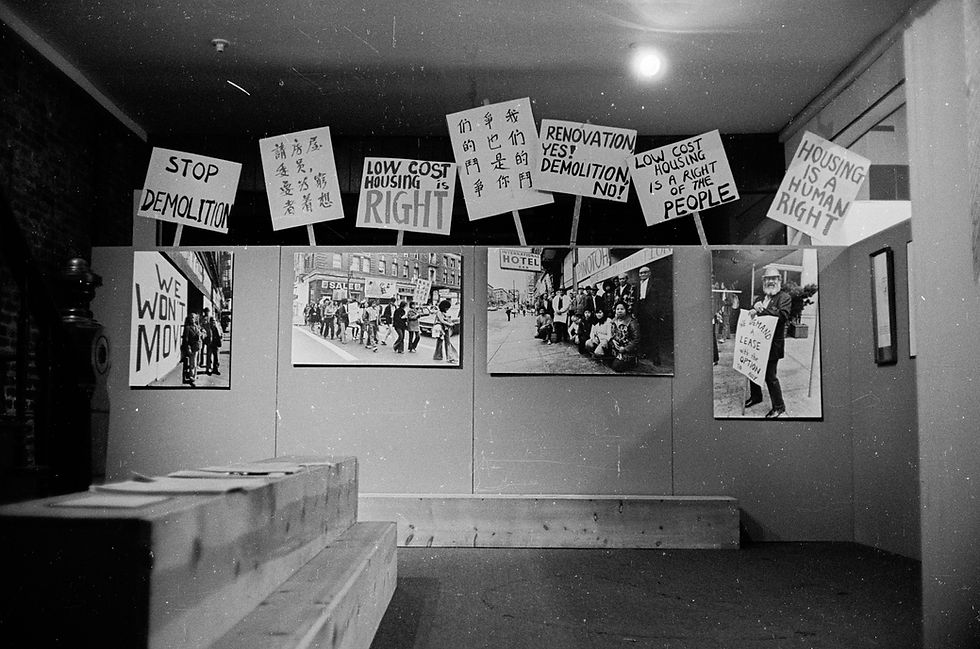
In 1996, facing dwindling resources, five San Francisco Asian American arts organizations (Asian American Dance Performances, First Voice, Asian Improv aRts, the Asian American Theater Company, and Kearny Street Workshop) banded together to form the Asian Pacific Islander Cultural Center (APICC). In the words of this year’s United States of Asian America Festival theme, APICC was a Common Ground for our community to advance our art and activism.
Thirty years later, APICC endures, but the forces that threatened its founding organizations are back with a vengeance. Our government is slashing arts funding, whitewashing history, and censoring people of color even as it detains, deports, and wages war.
APICC’s existence proves that our culture thrives because our people organize, creating spaces of community care, solidarity, and liberation. Against the all-out assault on imagination, memory, and freedom, this exhibition turns to APICC’s archives to show how we have always fought for and with our art. In these times, the archive is a refuge for collective memory and a weapon for concerted action FEATURED ARTISTS
Curator: Colin Choy Kimzey

Colin Choy Kimzey is an interdisciplinary conceptual artist and researcher born and raised in Yelamu (San Francisco), Occupied Ramaytush Ohlone Territory. Working across printmaking, installation, and curatorial and pedagogical projects, he creates site-specific inquiries into histories of migration, labor, urban development, and radical politics through silkscreen and through long term relationships with historic and present-day activist organizations.
ABOUT THE USAAF FESTIVAL
This year’s theme, Common Ground, invites us to reflect on our relationships with each other and with the spaces we move through together as AAPIs in the diaspora by exploring what it means to take up space and practice placemaking for others. The festival will celebrate modes of thinking about solidarity through shared experiences and histories by underscoring how visibility in public spaces can cultivate belonging.
How do API communities continue to create spaces for gathering and community care through arts and culture? How do we use these spaces to act in solidarity with other BIPOC and/or LGBTQ+ communities and work towards collective liberation?
What does it mean to create and hold space for healing, and how does API cultural expression inform the ways that we are able to expand reflective spaces within ourselves?
How do we continue to create spaces to amplify API narratives in the face of injustice and erasure in the United States? How can the arts help us imagine new ways to tell our stories and steward our histories for future generations?